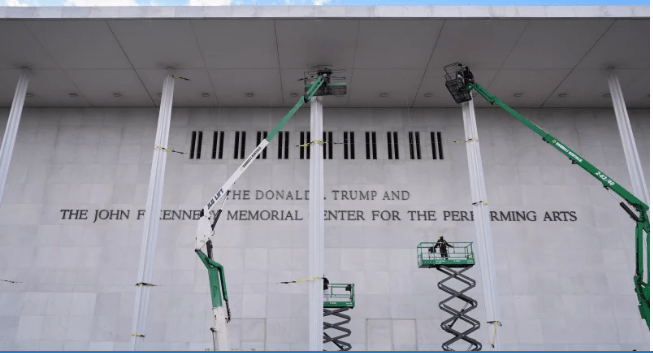
Late in December 2025, the John F. Kennedy Center for the Performing Arts received new signage bearing a different name: The Donald J. Trump and the John F. Kennedy Memorial Center for the Performing Arts. The change followed a vote by President Trump’s hand-picked board, and crews quickly installed the new branding on the building’s exterior. In response, performers began canceling appearances, including major New Year’s Eve concerts, saying the renaming conflicted with the spirit and purpose of the institution.
This isn’t just a story about a name change. It’s a cultural warning sign — and one that far too many media outlets have treated as a routine political squabble instead of what it really represents.
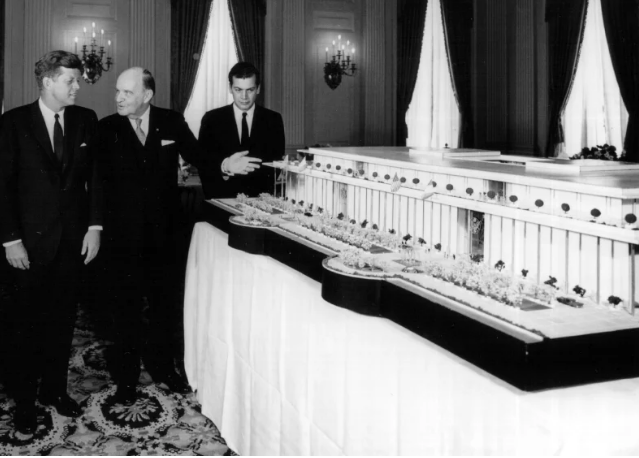
Names are not neutral. They are shorthand for values, history, and collective memory. The Kennedy Center was established by Congress in 1964 as a living memorial to President John F. Kennedy, meant to honor not only a man but an era, an idealism, and a commitment to the arts as a public good. When that name is altered without broad consensus or clear congressional authority, it doesn’t simply rebrand a building — it reshapes the historical narrative attached to it.
Much of the coverage so far has focused on the surface details: who voted, who protested, which artists pulled out. Those facts matter, but they don’t get to the heart of the issue. The more important question is what happens when we allow political power to edit history in real time. When a sitting president attaches his name to a national memorial originally dedicated to someone else, it blurs the line between honoring legacy and manufacturing it.
This is where the media has an obligation to go deeper. This is not just a Washington story or an arts story — it’s a national one. It raises serious questions about the limits of executive power, the role of Congress in protecting public institutions, and how easily collective memory can be reshaped when symbolism goes unchallenged. Yet much of the reporting has remained transactional rather than reflective, describing reactions instead of interrogating meaning.
There’s also the false framing of “both sides” that often creeps into coverage like this. Yes, there are political disagreements, but this isn’t simply a partisan argument. Members of the Kennedy family, former lawmakers, legal experts, and artists have all raised concerns rooted in legality, tradition, and cultural stewardship. Artists aren’t canceling performances because of casual political disagreement — they’re doing so because they see this as an intrusion into artistic independence and historical integrity.
If this kind of rebranding goes unquestioned, it sets a precedent. If national memorials can be renamed or reshaped to suit political ambition, what stops future leaders from doing the same elsewhere? Museums, monuments, public awards — all become editable, all subject to whoever holds power at the moment.
That’s the damage we risk when stories like this aren’t given the weight they deserve. History doesn’t disappear all at once. It erodes quietly, through symbolic changes that feel small until they aren’t. The role of the press isn’t just to tell us what happened, but to help us understand why it matters — and what it costs when we allow history to be rewritten in plain sight.
Names endure. They teach future generations what we chose to remember, and what we allowed to be altered. The question now isn’t just whether people agree or disagree with this change, but whether we’re paying close enough attention when history is being reshaped right in front of us.
 And your ears shall hear...
Leave a comment