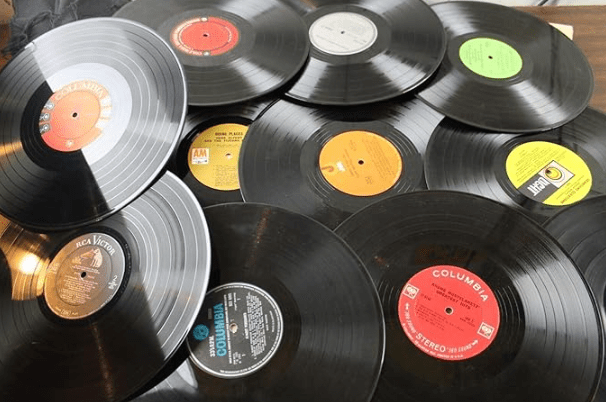
Despite being a music nerd of rather ridiculous proportion; when Adam asked me where I thought we were in the lifespan of the ‘vinyl renaissance’ or if we have passed it; I froze without an actual answer. Some uh’s and er’s later, I realized I probably could’ve spun some poppycock to fill the space and hopefully appear to know something; but it didn’t feel like the honest or genuine thing to do. So I asked to take the question for homework, and really do a deep think to see if I could hopefully do more than spin some poppycock to fill this space and hopefully appear to know something about the topic.
[MY JOURNEY FROM LP TO CD]
I will start with my own exit from vinyl. As a kid, I collected hard rock and heavy metal LP’s with whatever found money I encountered through allowances, chores, and gifts. Most of my collection came from our local department store’s ‘budget’ section and through coupons at Norridge’s Rolling Stones that magically turned any domestic LP into a $5 investment (or less if I found them in the stacks or on the back wall). Still, I was able to amass a collection of about 250 LP’s from AC/DC to Venom over the course of about 6 years of collecting. The first strike came when I purchased the original pressing of Slayer’s REIGN IN BLOOD, and watched the stylus act as if it were part of a hurdles race as it refused to track. It skipped like mad despite all of the attempted corrections made to adjust anti-skate and tone-arm weight. Still, I could’ve put a roll of dimes on that stylus, and it wasn’t going to play cleanly on my turntable. Head slung low over not being able to hear “THE” metal album of its era, I took it back to the store, where they put it on their system and played it without issue. Was doubtful that I was going to have money to get a higher grade turntable, but
thankfully they let me exchange it for a cassette.

The second strike came on a visit to Pacific Stereo in an area mall. While the actual conversation has been lost in the 38 years or so since it happened… it was provoked when a clerk asked why I was looking at turntables when cd’s were going to be the next thing. Didn’t really have an answer for her, but it soon turned into a debate that 14-year old me was arrogant enough to think I could win. Pretty audacious as I couldn’t even read a spec sheet then or understand how an EQ unit worked. But I imagine I was flailing to rebut the superior build quality; the actual potential for cd’s; the durability; and the full sonic range that could be captured on a cd without compromise… In much the same way current vinyl diehards just fall
back to the ‘it just sounds better’ opinion. To be fair, specs often are used to justify what we’re hearing… but cannot override personal opinion and experience. Seeing 5 turntables in that store (most flimsy and cheap-looking) and one with a laser stylus that tracked like a cd player; while seeing a whole wall of cd players and receivers showed me the future whether I was ready for it or not. When I finally got a cd player for Christmas in the late 80’s, I still purchased LP’s that didn’t initially make the transition to cd; but by the mid-90’s these were becoming few and far between. By the time I left college, I had about 4 milk crates of vinyl and several hundred cd’s.
[FROM RECORD STORES TO “RECORD” STORES]
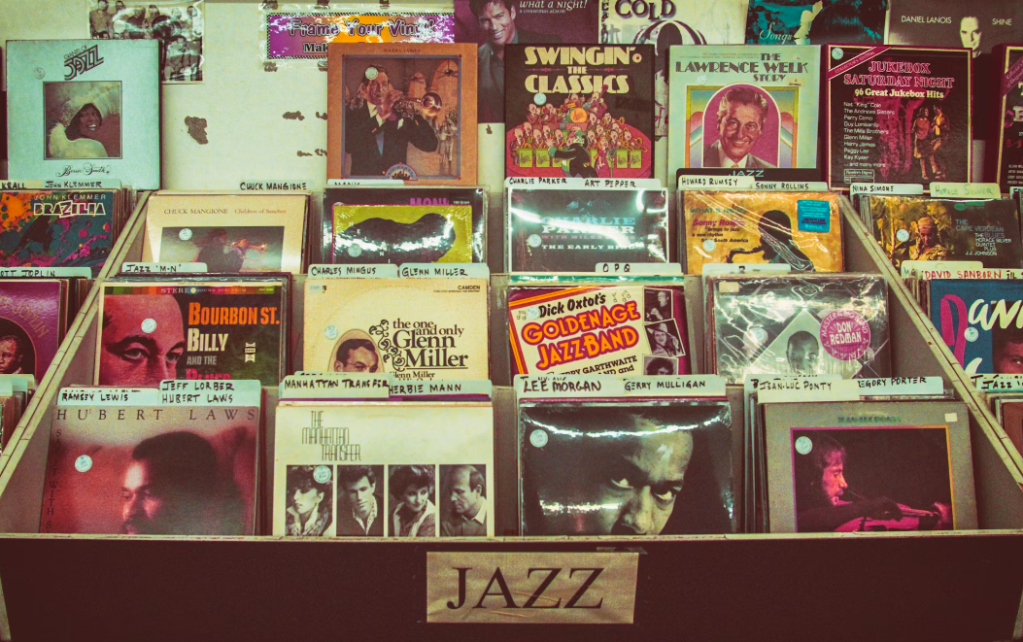
In my cd gathering, I tended to prefer used items over new, and often bought certain albums out of a mindset of possibly never seeing it again. (Likely inherited from my metal LP purchases, as it seemed like there were only a dozen of us into it, but only one or two copies of the rarer titles.) When cd’s first started arriving, it was like putting cars in a shoe store. Most places didn’t really have adequate ways to display them. The discs were packaged in longboxes and sometimes they would be shown in the glass display case underneath the cash register and the store’s work surface. Others placed them inside locked displays that were previously used for 8-Tracks and cassettes.
Eventually some stores caught on that the longboxes would fit two-astride within the space of a traditional LP; and so vinyl offerings shrank as cd’s took over those spaces. Many stores of the era were fly by night locations that didn’t have the traffic of a mall shop or the authenticity of the better independents. Places would magically appear temporarily at strip malls and shopping centers all over the area with $16.98 cd’s and $8.98 cassettes; a few t-shirts and ephemera; last about 6-18 months and be gone. Another shop with a similar inventory but different name and environment would appear in a shopping complex down the road seemingly a year later. In the Chicago area, there were a few strip mall stores like Rose Records, Flipside, The Compact Disc Store, Oranges, and Coconuts that still evoke positive memories of this era. Of course, if you ask any music fan who lived in this area from 1984-1994; many have a beloved local that got away once big box stores came into the market.
[THE FIRST WAVE OF DESTRUCTION: 1992 & THE RISE OF BIG BOX STORES]
Most of my happy hunting grounds were ultimately decimated first by stores like Best Buy and Circuit City who could offer loss-leader pricing on the titles that were more likely to sell. Best Buy came into the Chicago market in 1992; and I got to see first-hand how it undercut the smaller local shops. Why support the local at $14.99 when you could get it for $9.98 at Best Buy or $9.96 at Circuit City? Most independents couldn’t touch these titles from their distributors at a cost less than $11.50 when you include shipping… so comically, you would see record store operators go in and wipe out the $9.98 rack at Best Buy. Especially when the distributors underestimated how much Nirvana NEVERMIND, Spin Doctors POCKET FULL OF KRYPTONITE, or Ministry PSALM 69 to bring in. Initially, Best Buy treated sales as sales, but eventually put a limit on how many copies could be purchased in each transaction. As big box retailers looked to be the value choice; the Chicago area also became home to larger specialty music retailers like Tower Records and Virgin Megastore. Tower may not have been able to touch Best Buy’s sticker prices; but when you went through each week’s release schedule, darn if not every album found shelf space at Tower. Another entry, Virgin Megastore met Tower’s strategy head-to-head; but had a significant advantage of stocking imports from all over the world. In the interim, media retailers like Barnes & Noble and Borders were sporting
cleverly curated music sections the size of former small independents, and holding fast to special orders which was a valuable service pre-internet.
[THE SECOND WAVE OF DESTRUCTION: NAPSTER & APPLE]
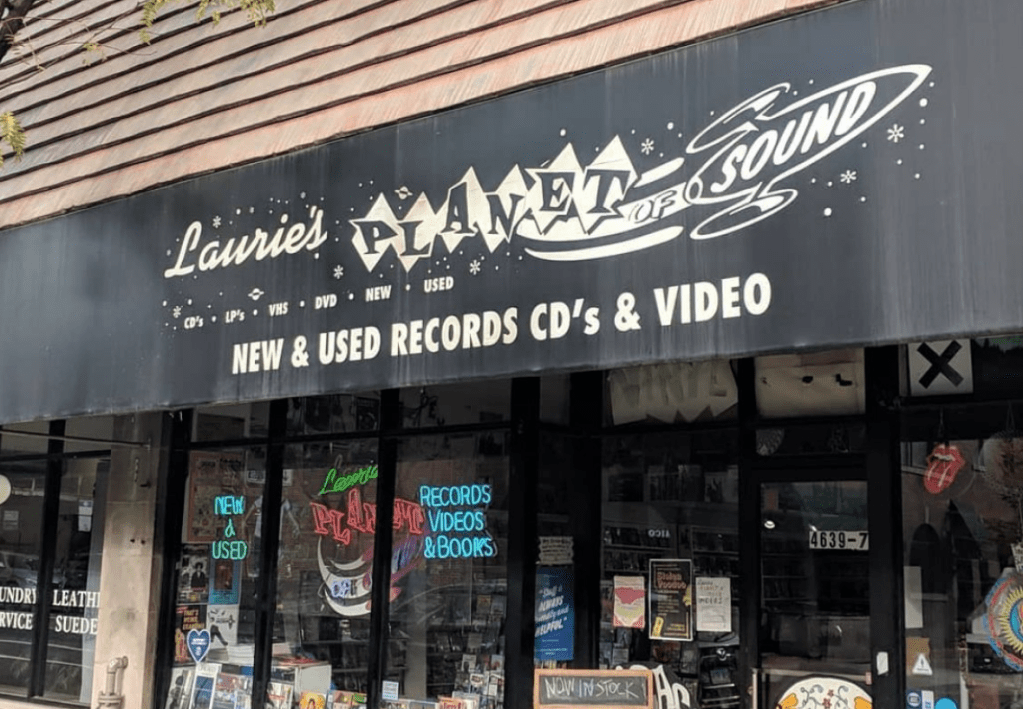
A few independents weathered the storm from the onslaught of bargain and deeper stock competition; but everyone in the physical media space suffered with the rise of mp3’s, virtual product, cd-r copies, and eventually streaming. My experience suggests that things started slipping in 2000, and by 2008; most of these stores had gone out of business or had greatly reduced their stake in physical media. Watching Borders go from Books and Music to greeting cards and novelties was a bit of a disappointment. The only thing easier to duplicate than a cd on a desktop computer was printing out your own greeting cards using cardstock on your own printer. It didn’t seem to make sense, and then the bankruptcy hit, the stores were liquidated, and eventually closed. Barnes & Noble had been on a similar downward trajectory as they reduced shelf space for periodicals, books, and media; and have leaned in to journals, Godiva chocolates, board games, and tchotchkes to fill the spaces. After online locations like Amazon and eBay had made it easier to find rarer albums, Tower filed for bankruptcy for the final time in the mid-2000’s and weren’t able to find their way out. Virgin fled around the same time. Strangely enough, some independents still found a way to survive by selling used product. In the mid-2000’s we also saw Half Price Books and Music enter the Chicago market and find success and growth in a way that seemed to elude frontrunners like Barnes & Noble or Borders.
[THE RISE OF RECORD RENAISSANCE]
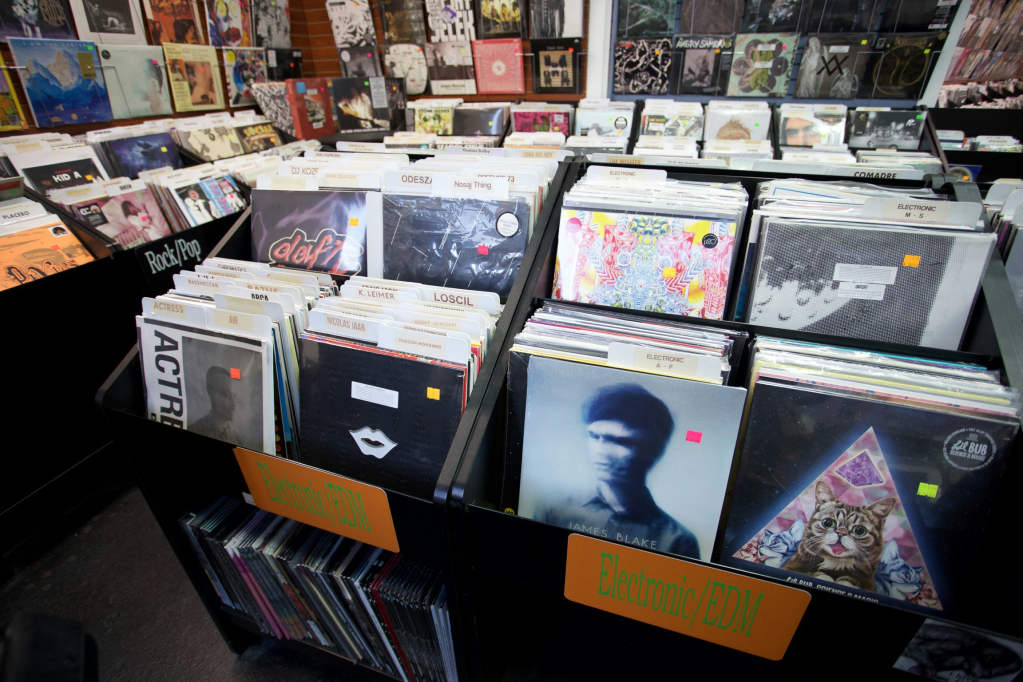
It is kind of embarrassing for me, because I pretty much missed the return to vinyl. My experience was that it was a subtle thing. Though I had moved on to cd exclusively in 1989; records by artists like R.E.M., Pearl Jam, and Eric Clapton had vinyl editions in the 90’s and beyond. Still, people were selling their LP collections at yard sales in the 90’s at $1 a piece or less. While I knew vinyl editions were released, I had only seen Pearl Jam’s VS. on LP as a new release. Record shows were starting to lean more on bootleg videos and rarer cd’s. If I were to argue about the start of the vinyl renaissance; I might actually point to a movie like HI FIDELITY with John Cusack and Jack Black, There have been a handful of movies that romanticized vinyl (perhaps ALMOST FAMOUS could be part of this…) But I argue that the start of the vinyl renaissance had a certain innocence and cool to it. It wasn’t necessarily called to by the labels or the retailers… But eventually attention would be called to it by entertainment columnists and cultural bloggers. That doesn’t mean labels or retailers didn’t exploit it. The annual RECORD STORE DAYS in April and after Thanksgiving played heavily into the growth of vinyl. Though CDs were still outselling LP’s until 2020; most RSD offerings were on vinyl. Sadly, RSD hasn’t really been the savior for independents that it was supposed to be. Unique RSD variants have an MSRP that can be far more costly than the common editions;
with only a difference in vinyl color or packaging separating them.
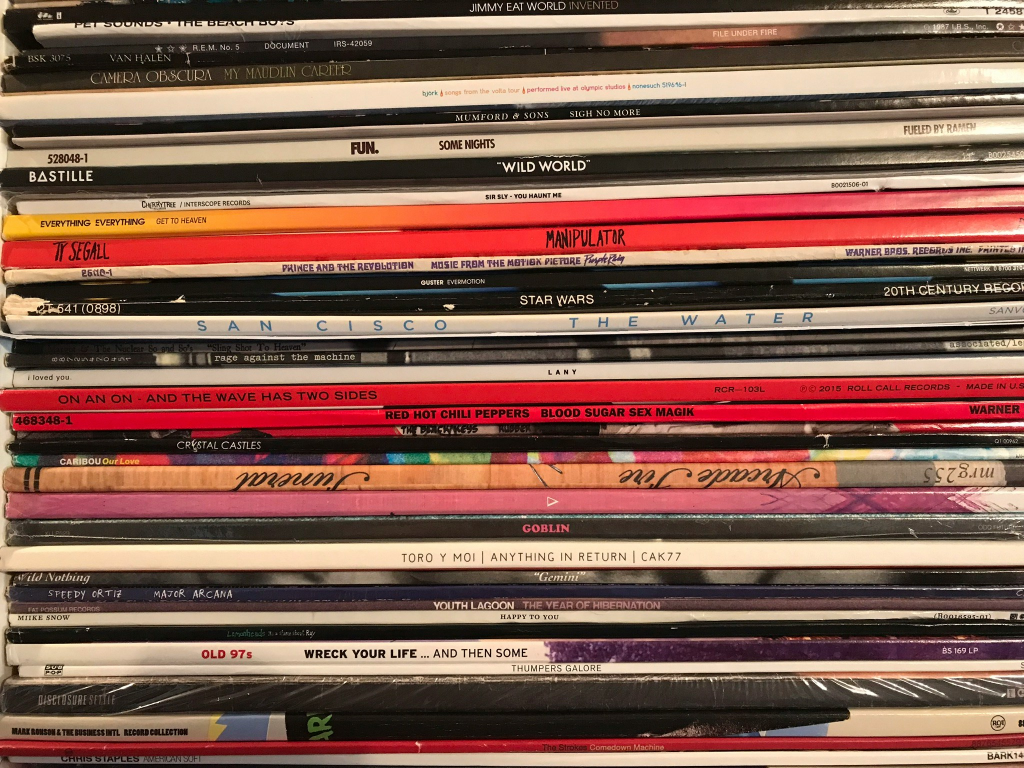
Though vinyl is still dictating the release schedule, during the pandemic, we’ve seen people really try to fan vinyl’s flames and start similar movements for compact discs and cassettes. High prices for vinyl, which are at least double the cost of a basic CD issue, may eventually put the brakes on vinyl’s growth (if it hasn’t already). It also hasn’t helped that major labels have chosen to take the easier money by licensing their material to others rather than manufacturing it themselves. “Music-on-Vinyl” and “Back on Black” are two of many labels officially reissuing major label albums and taking the risk of recouping their manufacturing and packaging costs. No matter how hard the flame burns for vinyl, it seems like the major labels couldn’t be playing it more conservatively.
As a music fan and consumer, I do think that physical media still has an audience and a customer base. During the lockdowns, people were able to rekindle their experiences, and demand for LPs and CDs went up. As we move further away from these times, and potentially toward a weakening economy, I can’t help but think that demand will decrease for $39 LPs and $20 CDs. In addition, the costs of shipping and of doing business on e-commerce sites like eBay and Discogs have the potential to push customers offline and into real retail spaces in pursuit of these goods. The much-heralded CD renaissance seems to be an effort by baby boomers to pump-and-dump their CD collections for a more favorable price than when they liquidated their LP collections 30-something years ago. While I don’t think the market will completely evaporate, I do think some corrections in this market will need to happen in order to sustain it.
James Wayman is a music enthusiast, collector, musician, and educator from the far northwestern suburbs of Chicago. You can follow, comment, and/or react to his ‘album a day’ capsules on Twitter/X at @SMFOBA51.
 And your ears shall hear...
Leave a comment