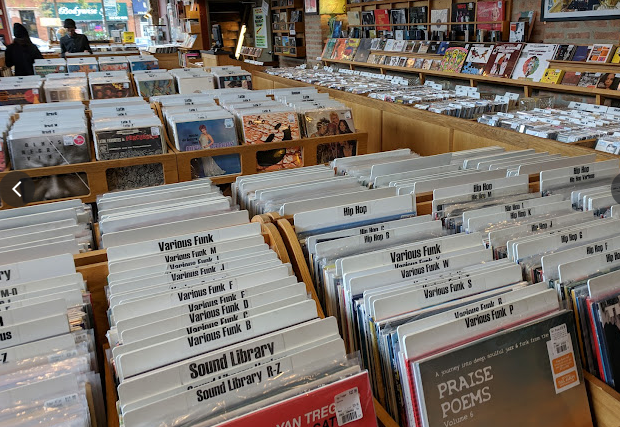
I am that rare creature that genuinely loves making regular visits to our area record stores to browse compact discs in person. More than 35 years after receiving my first CD player and my first CDs, I still get a genuine spark out of this ritual. When home, I am lucky to be within 90 minutes of Chicago, Milwaukee, or Madison and the various musical emporiums that each has in its respective area. Before traveling, I try to research if there are any stores in the area that I can make a part of the overall itinerary. Some like San Francisco, Minneapolis, and Bloomington, Illinois have been pleasant surprises with an abundance of options, others like Fort Myers and Davenport, Iowa were fairly disappointing in the lack of options, the size of inventory, or the general condition within the shops.
When it comes to discussing record stores within online user groups or with other collectors, I find that they tend to go in two directions. With the first group, I find it fascinating these people are more than eager to evangelize for some of the great stores. Conversely, that second group guards their choices like secret fishing spots in fear outsiders will overwhelm and depopulate these stores. Most stores are solely reliant on traffic and transactions in both their physical and Discogs spaces. It is understandable, though, that collectors operate in their own interest, which often means the best combination of price and selection against the least amount of competition possible. Though shop owners could easily feel like these buyers are eating the hen rather than the eggs and that these kinds of customers only make it harder to keep the doors open, the lights on, and the employees paid.

Despite my personal greed for unique items and special bargains; since the Napster era, I’ve been part of the first group. (Probably not a surprise given the last paragraph…) I recognize that without finding hundreds of people just like me willing to open my wallet or tap my phone on their premises to turn over their inventory, they won’t be there long. Conversely, a bad store is a bad store and as enthusiastic as I am about this category; I do feel that rewarding bad only leads to more bad.
When I say a store is good or it is bad, it doesn’t really make a ton of sense if I don’t include some qualifiers. Many things make a good record store and browsing experience. It only takes a few things to make it miserable, so before I hit the exits, I want to include those choices certain bad stores make that they can’t blame poor results on customers or traffic.
1. Stores that maintain separate in-store and online inventories.
While trying to be sensitive to the nature of Discogs/eBay seller ratings systems that work against stores unable to fill orders… it should be more special for the in-store customer who makes the effort to see you in person. Nothing is more frustrating than browsing a used bin that is loaded with common titles and nothing special. It is difficult not to imagine the seller having spent less than $1 per piece for that copy of Pearl Jam’s NO CODE, R.E.M.’s orange MONSTER jewel box, or even that Garth Brooks box set; and then trying to get $5.99 for each. Sure there were a lot of these made because it was assumed a lot of people would want them… but decades later we got the real result. Conversely, why keep that odd title in the stockroom to sell to some whiny online customer who is only going to bitch about it taking too long to arrive; being in worse condition than described; or go through a petty ‘make an offer’ process where neither side is happy?! Especially when you can put it in the hands of someone who will enjoy the pleasant surprise of having found it, and get your money for the item then and there. My favorite stores are not necessarily the ones that underpriced rarities; but the ones that at least made them available. I still can see Hootie or Jewel anywhere decades later; but I genuinely appreciate seeing a used Guadalcanal Diary or King’s X cd in the stacks. Please up your cd game so that it is better than the thrifts…
2. Stores that are now matching higher Discogs prices almost exactly and uniformly in a way that clearly overvalues their inventory. Some may argue that the market has never been clearer since Discogs has become a primary online channel to acquire physical music. Despite not owning a business, I do feel I understand some basics here. Discogs takes a cut of the sale price (and the shipping charges) and many sellers are brick and mortar locations with the same line items to cover. In store, you do not have to pay that Discogs cut, nor do you have to collect shipping materials or drop it off at the post office. It’s natural to “want” that markup money; but it comes at a cost of ill-will. Many customers are as equally aware of the Discogs price (which may very well made them go to physical locations for such a search). Seeing no difference in prices or condition costs you the sale.
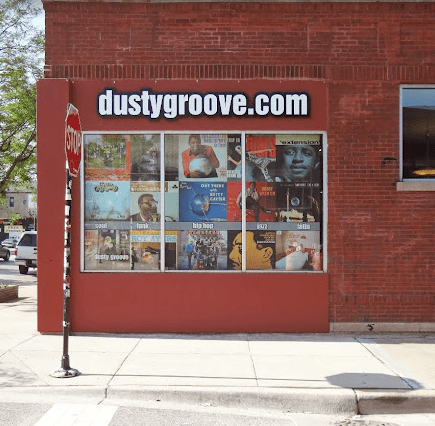
While it can be argued that an in-store purchase is equally convenient for both sides; so it is okay to pass this convenience cost to the consumer. Still, I ask the question as to who needs the sale more? The customer or the business? It has been answered, or else stores wouldn’t accept credit cards or have opted to sell online through the available channels. The only thing worse is a store that clearly overvalues its inventory. A first-state EAGLES LP only holds value when its condition is exceptional for its age. Some patina is expected on older items; but aside from a legitimate autograph or other noted uniqueness, it comes at a cost. It is disappointing to see any LP’s issued during my childhood hanging on the wall at the local for $75 when you know it was played on bad equipment, probably has some creases/dings to the cover/inserts; and maybe some seeds-and-stems residue along the line of an inner gatefold. Like three runs through a record vac and cleanser won’t get all those clicks and pops out…
3. Stores that are only welcoming on RSD or stores that use RSD to exploit their customers. With the investment many stores make on RSD titles each April and November, there is a definite financial interest in getting traffic into the store and these titles turned over. But RSD is the day they go all out to a group of people that may or may not be supporting them as much throughout the year. I don’t need donuts or live music to decide upon a record shop to visit Still, I can’t tell you how many times I’ve gone into a shop and have not been greeted unless/until I have a noticeable stack of cd’s to bring to the counter.
To the opposite, I recall hearing first hand of a certain record store in Peoria that did all of the RSD advertising and investment, only to pull out the key rarities to throw online. While the RSD organization has been working hard with eBay to prevent future occurrences… I can’t imagine the trust issues this creates throughout the system.
In closing… Though, I’ve gone well past the point of brevity here, these are my key annoyances with record stores and used cd shops. While I’m certain I could come up with and include others; I am grateful to the Cut Out Kid for giving me the chance to share this topic and these ideas with you.
Please feel free to send your own lists or any questions/comments to the Cut Out Kid and he will ensure I know about them. Who knows, maybe I’ll even get the chance to address them in a future guest post.
James Wayman is a music enthusiast, collector, musician, and educator from the far northwestern suburbs of Chicago. You can follow, comment, and/or react to his “Album A Day” capsules on Twitter/X at @SMFOBA51.
 And your ears shall hear...
Leave a comment